Lecture and Workshop Program at Skaņu Mežs 2024
On October 3-4, Riga Latvia’s Skaņu Mežs festival for experimental music will hold a series of free-entry lectures and workshops at the Jāzeps Vītols Latvian Academy of Music and the Art Academy of Latvia.
The series of lectures is open for free to students, musicians, artists, journalists and simply enjoyers of music. The lecturers and workshop hosts include relevant figures in experimental music and related fields, such as Pulitzer prize winner Raven Chacon and Jennifer Walshe, hailed as “the most original compositional voice to emerge from Ireland in the past 20 years” (The Irish Times).
The topics will range from advanced vocal techniques and free improvisation to composing with AI and music photography.
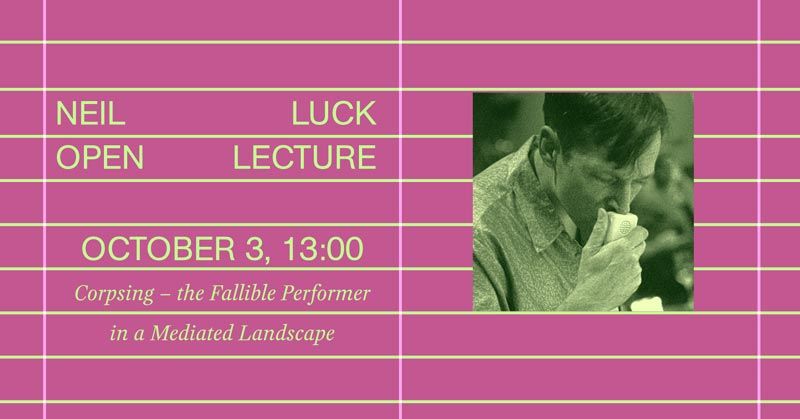
Who: Neil Luck
When: October 3, 13:00
Where: Art Academy of Latvia (Kronvalda Boulevard 4, former University of Latvia Biology Faculty), auditorium 2
Topic: “Corpsing – the fallible performer in a mediated landscape”. Composition with multimedia and live performance
Neil Luck, composer and teacher of experimental music in London, will discuss composition with multimedia and live performance. The discussion will look at the landscape of hybrid practices in the fields of new and experimental music, and broader performance practices, as well as examples from Luck’s own work including some live experiments from recent body of works Sensible Activities, and a new collaborative video work and installation – Almanach – for Survival Kit festival (Latvian Centre for Contemporary Art).
Luck’s work often explores the pathos and interaction between live human performance and multimedia. It attempts to frame the act of music-making as something curious, weird, helpful, or spectacular in and of itself. Neil’s work takes various forms, from music theatre to concert works, radio, public projects, and recordings. He is the founder and director of the music-theatre ensemble ARCO, an experimental music-theatre company. Independently, he has also worked with and written for people and ensembles in the UK and abroad and presented work at music venues, festivals, and galleries internationally, including Tate Britain, Tate Modern, Venice Biennale, ICA, Whitechapel Gallery, Palais de Tokyo (Paris), and BBC Proms. He is currently a professor of Experimental Music Performance at the Royal College of Music, London.
Neil Luck will be performing live in duo with Jennifer Walshe at the Skaņu Mežs festival for experimental music on October 4 at concert hall Hanzas Perons.
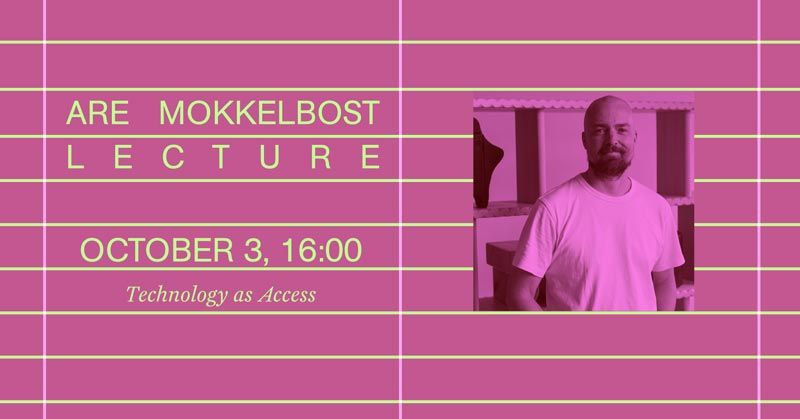
Who: Are Mokkelbost
When: October 3, 16:00
Where: Art Academy of Latvia (Kalpaka boulevard 13), building K2
Topic: “Technology as Access”, lecture and individual work with students
Are Mokkelbost is a multi-disciplinary artist based in Oslo, Norway. Since graduating from the Oslo Academy of Fine Arts in 2002, his practice has moved between art, music, and design in solo and collaborative efforts. He teaches irregularly in fine arts, craft, design, and architecture departments, focusing on creative methodology. Collage has been a recurring method, as works on paper and translated conceptually into work in other techniques such as sound, glass, clocks, mural reliefs, textiles, and furniture. This approach can be seen in many public artworks made during the last 15 years and, more recently, in furniture and interior design. With his music, Mokkelbost has played in Riga on several occasions—the first time in 2001 with the electronic improvisers in ARM. Later, he played at Skaņu mežs with his metal-collage solo project Single Unit, then the epileptic, audio-visual metal band KILLL, and lastly, his DJ project Dausteg with Spykidelic, merging skeletal grime and dark hip hop instrumentals with avant-garde textures.
For his presentation, he has been asked to view his practice in light of technology and how it affects such a multi-disciplinary practice.
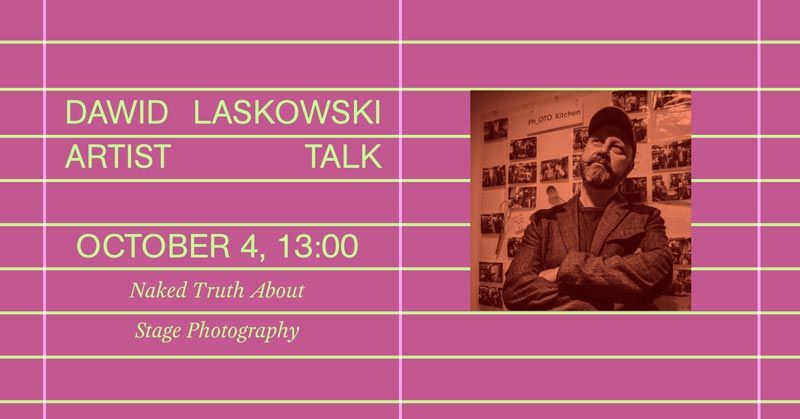
Who: Dawid Laskowski
When: October 4, 13:00
Where: Art Academy of Latvia (Kalpaka boulevard 13), building K2
Topic: “Naked Truth About Stage Photography”
What makes a ‘good’ photo of music and its makers making? And to who? And what is a photo ‘good’ for, and for how long? Can it be(come) not ‘good’, or more or less ‘good’? Can photos be ‘un-taken’? Can photos taken, of music made, be disappeared?
Dawid Laskowski is a London-based Polish-born photographer working in both color and black & white. Avid and eclectic listener, music is one of the main subjects of his photography. London’s Cafe OTO – one of the most vibrant improvised and avant-garde music venues in London – in-house photographer. Collaborated with numerous music magazines, including The Wire Magazine, Jazzwise, MI Magazine, and international publications such as The Financial Times, The Guardian, and Time Out.
Dawid Laskowski will also be taking pictures at Skaņu Mežs 2024.
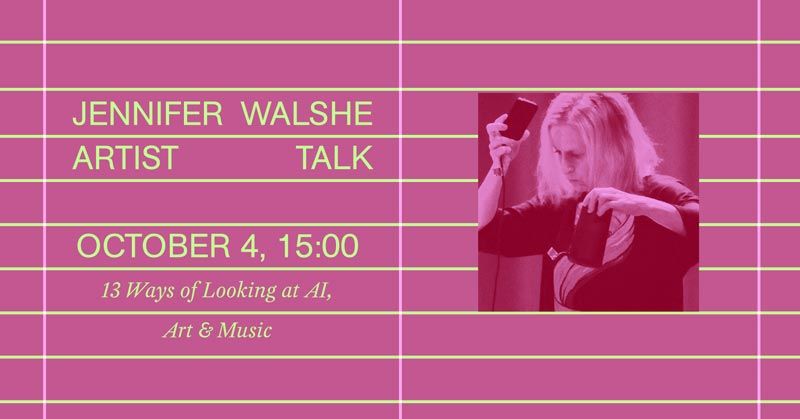
Who: Jennifer Walshe
When: October 4, 15:00
Where: Art Academy of Latvia (Kalpaka boulevard 13), building K2
Topic: Artificial intelligence, art, music, interdisciplinarity
J. Walshe: “AI is not a singular phenomenon. We talk about it as if it’s a monolithic identity, but it’s many, many different things – the fantasy partner chatbot whispering sweet virtual nothings in our ears, the algorithm scanning our faces at passport control, the playlists we’re served when we can’t be bothered to pick an album. The technology is similar in each case, but the networks, the datasets and the outcomes are all different. (..)
So how should we think about art and music made with AI? Instead of looking for a definitive approach, one clean (and/or hot) take to rule them all, perhaps we can try to think like the networks do – in higher dimensions. From multiple positions, simultaneously. Messily. Not one way of looking at AI, but many.”
Composer and performer Jennifer Walshe was born in Dublin, Ireland. Her music has been commissioned, broadcast and performed all over the world. She has been the recipient of fellowships and prizes from the Foundation for Contemporary Arts, New York, the DAAD Berliner Künstlerprogramm, the Internationales Musikinstitut, Darmstadt and Akademie Schloss Solitude among others. Recent projects include TIME TIME TIME, an opera written in collaboration with the philosopher Timothy Morton, and The Site of an Investigation, a 30-minute epic for Walshe’s voice and orchestra, commissioned by the National Symphony Orchestra of Ireland. The Site has been performed by Walshe and the NSO, the BBC Scottish Symphony Orchestra and also the Lithuanian State Symphony Orchestra. Walshe has worked extensively with AI. ULTRACHUNK, made in collaboration with Memo Akten in 2018, features an AI-generated version of Walshe. A Late Anthology of Early Music Vol. 1: Ancient to Renaissance, her third solo album, released on Tetbind in 2020, uses AI to rework canonical works from early Western music history. A Late Anthology was chosen as an album of the year in “The Irish Times”, “The Wire” and “The Quietus”. Walshe is currently professor of composition at the University of Oxford.
On October 4, Walshe will play a duo with Neil Luck at the Skaņu Mežs festival, which takes places at concert hall Hanzas Perons.
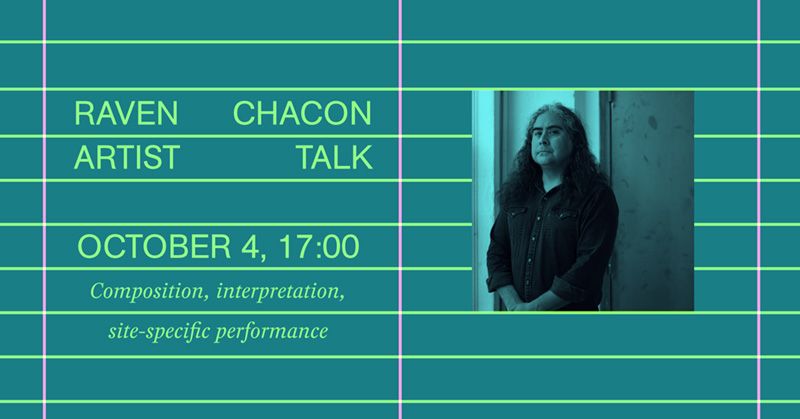
Who: Raven Chacon
When: October 4, 17:00
Where: Jāzeps Vītols Latvian Academy of music (Krišjāņa Barona street 1), LMT Chamber Hall
Topic: Composition, interpretation, site-specific performance
Raven Chacon is a composer, performer and artist from Fort Defiance, Navajo Nation. His work ranges from chamber music to experimental noise to large scale installations, produced solo and with the Indigenous art collective Postcommodity. At California Institute of the Arts Chacon studied with James Tenney, Morton Subotnick, Michael Pisaro and Wadada Leo Smith developing a compositional language steeped in both the modernist avant-garde and indigenous cosmologies and subjectivities. He has written for ensembles, musicians and non-musicians, and for social and educational situations, and toured the world as a noise artist. As an educator, Chacon has served as composer-in-residence for the Native American Composer Apprentice Project, where he taught string-quartet composition to hundreds of American Indian high-school students on reservations in the American Southwest.
In his artist talk Raven Chacon will discuss the relationship of music to presence, both in time and in space — whether that’s an immediate and present interpretation of a score that may require a high degree of improvisation, or whether a particular installation requires engaging with a specific site in the moment of encounter. He will discuss how pushing the boundaries and definitions of score, performance, or installation can put both performers and audience members at the bounds of their comfort levels, allowing them to engage more deeply with the realities of the present moment and location, and the histories and conflicts contained within.
Raven Chacon will play a solo show at the Skaņu Mežs festival on October 5 at concert hall “Hanzas Perons”.