Published on

From Microbes to Vibes: Thoughts on Sonic Ecologies explores the intersections of nature, technology, and experimental sound. The essays approach nature not merely as scenery but as a network of organisms, processes, and relationships, while technologies appear not as instruments of control but as tools for perception. Across topics ranging from field recording, radio transmission, and sonification to microorganisms, ecology, and speculative listening, the contributors examine how artistic and technological practices can reveal relationships that extend beyond everyday human experience.

Editorial
Sounding Microbial – ears, voices and sonic relations with our microscopic counterparts
  • Adomas Palekas
The Simpler, the Better
  • Artūrs Punte
Sound art through the eyes of non-musical field biologist
  • Līga Pentjuša
Music (sound) and a different kind of presence
  • Leif Elggren

A conversation between Pierce Warnecke and Matthew Biederman

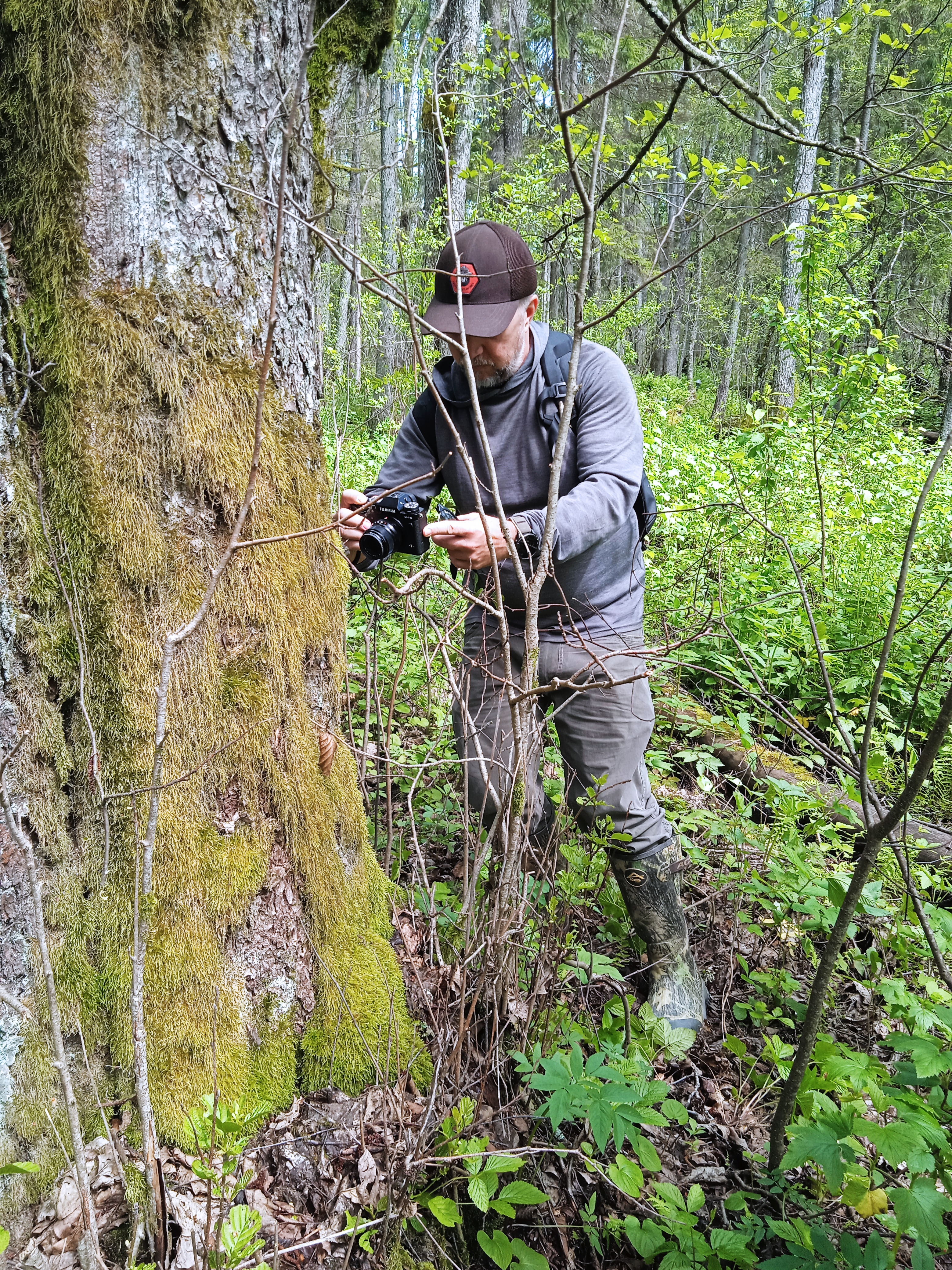
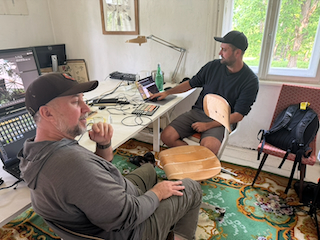
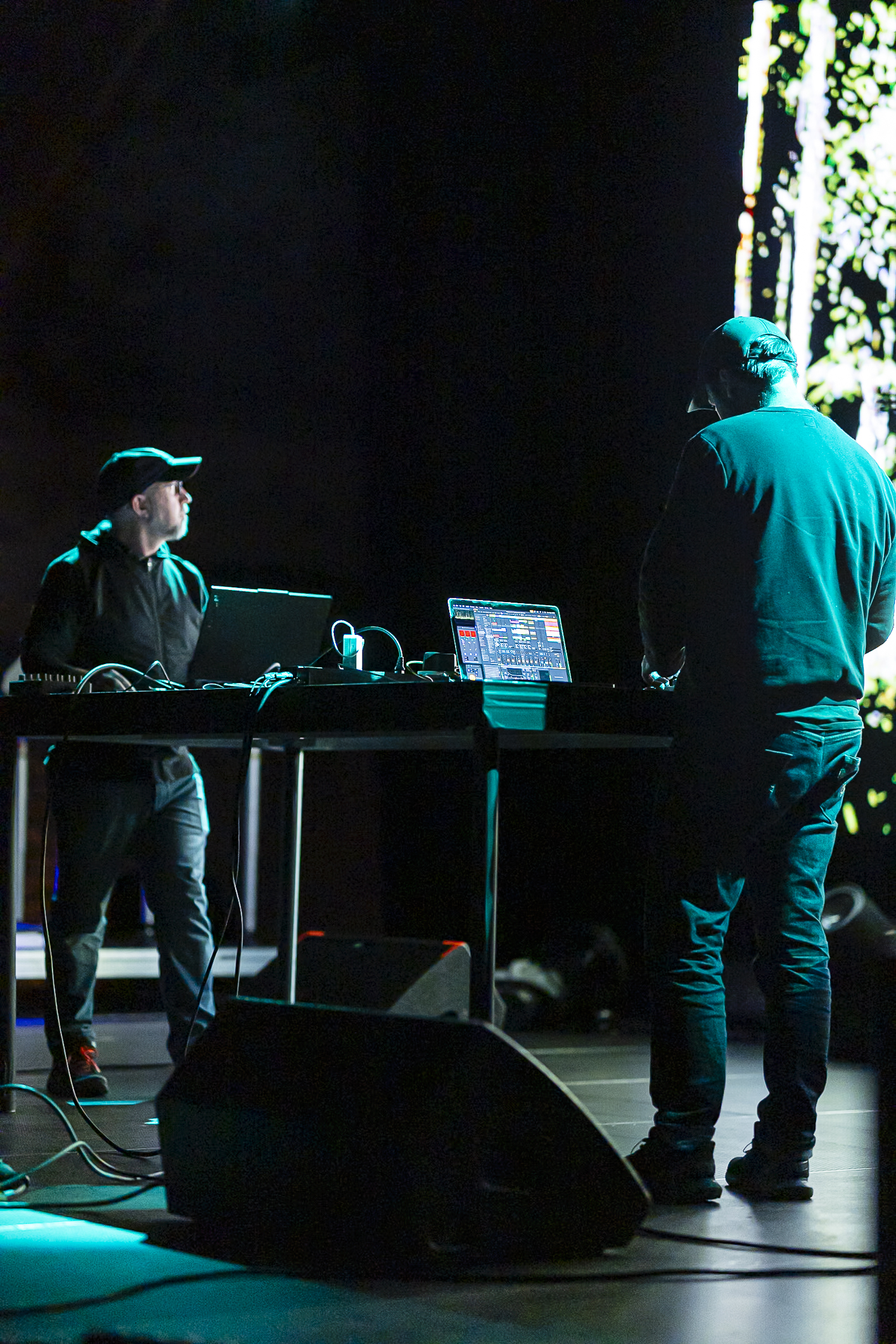
In the Spring of 2025 Pierce Warnecke and Matthew Biederman spent 10 days in rural Eastern Latvia as Artists in Residence through the tehknē + Skanu Mezs program. They explored the Latvian wilderness with the advice and guidance from local botanist Liga Pentjusa from the University of Riga), with a focus on protected forests, marshes and peat bogs. The artists performed botanical surveys using photogrammetry and field recording as a means to document these endangered environments. Their work engages with these places on multiple sonic and visual scales in order to provide an alternative perspective of human and non-human relationships and interconnectedness. Their conversation below provides a glimpse into their practices and projects.

PW: What is the idea behind Phytomorphic Topologies? Is it more of a continuation of your previous works, or more of a break, or a bit of both?

MB: Always a bit of both. Conceptually it's a continuation, specifically in terms of our previous work ‘Spillover’ where working within nature and trying to give the topology, the land a bit of agency in the creation of the work. Giving the land at least the opportunity to have some agency even if that sounds odd. It's a break in the sense of whereas with the way we conceptualized Spillover, and using ‘traditional’ instruments and players meant that we had to keep the work a little more scored and composed - whereas this work I feel is very free in terms of actually playing (visually at least) the material.

PW: Phyto is definitely more open; one thing I love is that we prepared like 20 environments (sounds and video) but only really have time to explore 5-6 during the performance.

PW: How would you describe the differences in working w/ traditional imagery in nature, vs photogrammetry : same approach? As the final result is delayed (model reconstruction), how does it change your relationship to the environment you’re in? Does it add or take away from immersion / being present?

MB: Collecting the imagery for processing into gaussian splatting and photogrammetry is a totally different approach to making a video or a photograph. For instance, the idea of framing disappears when working with photogrammetry, or at least it's an alternative way of thinking about framing. And in terms of your question regarding the way I am in nature or engaged with the subject, let's say is quite different from making a photo or a film - and maybe that is just another way of thinking about it. Like a filmmaker and photographer could potentially be interested in the same subject, but they both might go about capturing it in a different way. I'd say it's a similar shift when capturing for photogrammetry. For instance, you still have to think about exposure, focus, or timing, but you don't consider time, however there are considerations you don’t think about either, like overlap, and various angles of a single subject. In terms of the image meaning, I don't think that its more or less’ real’ - I'm very interested in the edge cases of how the gaussian splatting representations work to make a realistic model, or maybe how they find their edges, like the image can be totally almost hyper real, but then with a small shiftof the view point and the illusion falls apart. That’s even before there is any treatment of the point cloud - where the performance actually takes shape.

PW: Can you sort of tell while filming where those edges are, or make them happen? Or do they appear in processing? I know there was one nice surprise, when the trees reflected in the water were reconstructed as a second mirrored 3D model underneath.

MB: I think I began to see those ‘edges’ during the process of creating this project, at first it really was a little bit of the wow factor of the process that attracted me to it, then as with most of my work I begin to look where the technology breaks down, where the process becomes apparent. That said, I hope that there are always surprises like the way the reflections work - these ‘discoveries’ within a process are what keep me interested.

The actual act of shooting is maybe a little like field recording too, where you have to slow down at least - you never get the stillness of audio recording, but it's a little similar in the sense that you have to slow down and look and make sure you’ve covered the subject. Collecting takes much longer which I feel is a good thing in terms of just being with your subject, focused in a way that doesn't happen in the same way for me as when making a photograph. Shooting these photos to reconstruct means I get to spend a lot of time in a particular place.

PW: Very true : our week in Latvia, you returned 3-4 times to the same spot to do better scans, usually without me.

For much of my work I'm often behind a desk but to be outside, in nature, thinking and doing is such a treat, and honor that I think trying to give some space within the performance for that nature to have an active role, or one as we imagine it anyway. I think in this performance I really tried to find a way to not just represent nature through an image but represent energy in nature - in ways we will never experience ourselves, but how I might imagine it to be so. I think this correlates a bit with your process in that there are these extra sounds that aren’t part of a recording, that are maybe a part of the process of recording, that hint at these unheard, unrecordable sounds as well.

PW: How do you work between the representational and the abstract in the context of Phytomorphic Topologies? How do those approaches fit into your practice beyond this specific performance?

MB: I (and we) have worked quite a lot in pure abstraction, which I love to do, but I have been yearning to find a bit of a middle ground lately, I've been thinking about a lot of some of my favorite experimental filmmakers, like Paul Clipson, Bruce Baillie, or Stan Brakage who all can take exquisite shots based in representation, and stretch them into abstraction, Clipson's layering and light, Ballie’s use of natural scenes and of course Stan Brakages mothlight where he directly applied natural elements into the film itself. How does someone like me, who doesn't use film, use the digital to get at some of these issues? I think there is such a beautiful opportunity to use this technology that was made to be hyper realistic, like film or photography, to go really abstract, and to work within this tension, and give the audience some moments of reality and let the imagery drift into the unreal, the abstract which hopefully in turn goes along with your recording treatment, and gives some space for contemplation of the audience.

The technicality of Gaussian splatting is very interesting, layering these gaussians of a single color over one another until there is a 3d representation of not the thing, but of the way the light at the time I shot it reacted to the thing or the environment. The computation that takes (to me) is kind of mind boggling. The process grew out of a yet another way of processing photogrammetry called ‘Neural Radiance Fields or NeRFs - these are all like point clouds on steroids - rather than just having the three dimensional locations of points and their color, Gaussian Splats have all of that plus rotation, size,spherical harmonics, and transparency, so like over 50 pieces of information per point.

PW: Yes, also there is a long process between capture, processing, verifying the result of the model…it’s way less immediate than a simple recording.

MB: Totally, it’s kind of magic watching the software construct them!

And because of all that data, it also means that there is a limited amount of resolution available with these (at least gaussian splat radiance fields that can be manipulated in real time any way) and by zooming way in, or looking at the edges, or finding areas that the camera didn’t quite reach and the algorithm filled in (or didn't), then the whole thing becomes very abstract, and I love to work between these two modalities, and that somehow an image can be both abstract and hyper-real at the same time depending on the perspective.

PW: How important is immersion in your works? Immediate physical experience vs intellectual reflection?

MB: I kinda hate what the term immersion has become lately honestly. I mean I experience it, we all do, sometimes when you least expect it, but within ‘digital art’ it has a very loaded meaning. I am usually more immersed in a book than any digital artwork claiming to specifically be ‘immersive’...So now that we have this out of the way, I think a performance is about a physio-emotive experience. Trying to explain how everyone experiences the same performance is a fool’s errand, but I think there is definitely some sort of physical+emotional response to music and art that is impossible to quantify, but we all know when it hits right. As an artist, I think a performance is a moment in time that is very generous on the part of your audience. I really respect that or try to while not letting myself get too overwhelmed by that idea. I think that there is an energy to a performance that cannot be created anywhere else. It's live, it's real and as a performer I'm totally immersed anyway. Hopefully the audience comes along and it's an experience that is difficult to separate from a sensual experience vs an intellectual one.

PW: So immersion is just a capacity to project into another world, one proposed by the artist (book, music, film, whatever)?

MB: Maybe it’s the way we talk about getting ‘lost’ in something - I feel like ‘immersion’ in digital arts has gotten swallowed by VR/AR/XR - where I think performance work, when I see the performer get lost, or immersed in their own process or act of performing, then it usually means its good.

PW: Do you see technology as an expressive medium, or a tool to piece together ideas within a medium / project / practice?

I think it's a tool, one that has the potential to be expressive - I mean I try to build in the ability to be expressive. A computer, I guess, is kind of a general tool to build specific tools that can be expressive or not. Like for instance, a paint brush and paint are a technology just the same as technology that you plug in, but they allow for a certain kind of expressivity within their parameters, and artists have pushed that really far and continue to. So a computer has the ability to be expressive but one has to work with it to build specific tools in order for it to be expressive. I build software instruments. I see each performance as a new instrument, often built in the same environment, but the expressability is within these instruments, not the technology itself. I always think back to the film “The Five Obstructions”, by Lars Von Trier and Jorgen Leth - but typically my obstructions come from being entirely self taught as a programmer, or just something that yet can be done by the hardware I have at my disposal for instance. I don’t really think like a software person, or at least a try not to, I think like an artist. But then again maybe accountants also see expressivity in moving numbers on a spreadsheet.

PW: I’ve always felt there’s a line to try and not cross, between making art and making tools to make art; I think it’s easy to get too wrapped up in tools and never be able to finish the work (but I am super grateful there are people who focus on the tools!).

PW: Are there specific social and political topics of interest in your practice and how do you integrate them into your works? How do you weave those ideas into work with a more abstract and less narrative approach?

I think each piece is kind of compartmentalized when I start on a project - but in some way they all have to do a little bit about how technology is used, abused, or forced upon us and where it comes from. Like how technology is absorbed within society and how can it be turned around to be a liberating tool. This idea keeps me really open, from working in abstract terms which can mean liberation through, oftentimes, extreme experiences using flickering intense imagery, or maybe its sublime beauty that I aim for where you do have a bit of escape. Other projects reflect on the military-industrial complex quite directly as it is mostly responsible for the technology we all use to create interactive, computer or internet based work - and those ties I feel cannot be ignored.

PW: How do you think about sound when working on an AV performance? Is there an order, or is composition simultaneous? Do you have specific technical or theoretical approaches to combining 2 mediums, do you have specific areas that are more open to experimentation?

MB: I think it changes depending on the work - I mean you and I have worked together quite a lot. I also come from a background of VJing so sometimes I just follow the sound, which can be very fun, though I hardly do much of that anymore, but it's where you could say, I ‘cut my teeth’ in terms of audio-visual work. I consider it kind of a massive years long sketchbook. But these days, where things are more focused, I think I try to make sure there is space. Like space for the audio and video to sync naturally rather than a very 1:1 relationship, which used to be really hard to achieve but anymore it's not so tough technically speaking. It's maybe good to have a few of those moments that really blur the space between sound and image and what is following what but not 100% of the time. I've always enjoyed accidental linkages. There’s also been moments of inviting you, or another composer to ‘score’ a premade video work - there it's really about describing a particular feeling and then trusting the one you invite - and allowing for their work to exist. Performatively, I really believe in collaboration, which is a lot of trust. I think as artists we are all working towards something new - I'm not interested in directing anyone at the end of the day.

PW: Collaboration is a very important political stance for me, rather than falling into hierarchical structures / chains of command. Sharing the decision making as a group effort. I get that something as complex as theater or film making requires efficiency, but I feel there’s a risk of recreating (or perpetuating) capitalist or even military structures when power is centered around 1 person’s ‘singular’ vision.

MB: Agreed - we see how that is working outside of artistic spheres these days…

PW: Specifically in terms of Phytomorphic Topologies, did you start with a specific plant subject, or technical framework on this project, and how did those change between prep/planning and on-site action? How much does being in the field change your creative process and preliminary ideas?

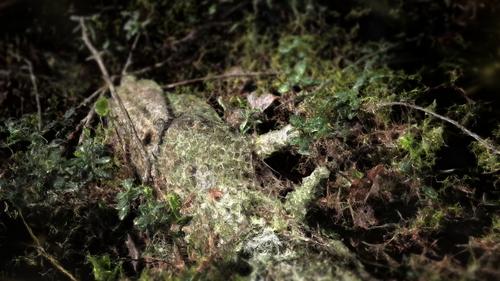
I think in a way for Phytomorphic Topologies, I was definitely interested in exploring a particular scale which was small, as a reaction to the large scale 3d representations we worked with in Spillover in Portugal. After we received the invitation for tehkne, and knew where we would roughly be in Latvia, we began to do a bit of research on the area. I don’t remember who first found the images of these rare/endangered bryophytes (mosses) but we were both immediately attracted to them. They also fit with this idea of a shift in scale from Spillover. Simultaneously, the jump from Nerf’s to Gaussian Splats was happening. I typically don't just jump to a new technology for the sake of jumping and trying the newest thing, but this was a perfect marriage between our ideas and technology. Being in the field and seeing what worked definitely had an influence, like I’d come back from shooting and see what result it gave me, and then go back sometimes to the same place the next day and reshoot parts that worked particularly well, not always successfully, as light, weather have big effects on the results of course.

PW: Definitely more time in the field on this piece, for me as well.

PW: This piece is at the same time figurative in terms of subject matter, and abstract in terms of the processing and form. How did you tie the different elements together?

MB: For me the interest in gaussian splatting is not the ‘reality’ it can convey - which when used properly is exceedingly good at making hyper real representations, but what happens when you zoom in really close to the representation, or what happens at the edges of your capture? Here is where it is really to me its best look. It begins to look like a painting, like really expressive all on its own. Adding a bit of movement, a bit of effects takes it really far - I kind of let it do its thing in this work and mostly just ‘explore the space’ in real-time looking for interesting view points and all the time listening and reacting to your composition and playing.

PW: I think your approach, and the tech’s capacity to alternate between hyper-real and abstract imagery, made me much more keen on working with field recordings and finding ways to also switch between representation and abstraction for this piece.

PW: You are working with rather novel technology for 3D modeling. Does the tech give off its own aesthetic, and how do you react to that (here specifically but also more broadly to other technologies, like AI for example)?

I think I ended up answering above a good part of this, but the way the technology works, with layered gaussian ellipses in 3d space allows for so much experimentation and its kind of the closest thing to painting ive seen in a digital realm without of course trying to represent a painting. Maybe in a way because of the way the splats are created and layered, some are massive, and some are really small or nearly transparent, that in fact it is the way someone might lay oil paint down, broad strokes to ever more fine ones, allowing here and there to see through the layers. Only for me I get to take them apart and put them back together. All that is solid and melts into air as the saying goes!

So in short, yes, I think any technologically mediated image does have a specific look and I think it's important to respect that, or to try and bring out what that is, work with it instead of against it. I never quite understood why someone would take a photograph, pass it through a filter to make it look like a woodcut, like just make a woodcut.

Moved the notes to a comment for formatting:

MB: Now it's my turn to ask the questions…and Ill turn your right back on you, What is the idea behind Phytomorphic Topologies? Is it more of a continuation of your previous works, or more of a break, or a bit of both?

PW: With Phytomorphic Topologies we wanted to think of different ways to work with and within natural ecosystems, both technically (in how we would record sound / video), but also conceptually, by working with threatened natural spaces in Latvia (forests, marshes and peat bogs). We wanted to use the opportunity to think about how and why we record, how and why we work with specific sound/video material, and other ways we could perhaps approach experimental sound and video in nature beyond phonography and photography.

For me it’s both a continuation of previous works such as Spillover, where we worked in rural northern Portugal at a proposed lithium mining site. We also wanted to find ways to both document the natural space but also convey a sense of urgency about the potential destruction and direct effects on the local population, the environment, etc. I have also worked quite a bit with field recordings in the past, but never in the sense of pure field-recordings : I don’t have this observer / documentarist approach. I think what was different for me here, is perhaps the way I approached working with the natural setting during the recording process, but also in the editing and performance parts too.

MB: How important is conveying a sense of place? Like a specific place or is there a sense of universality within field recording? Maybe even a touch of nostalgia which is probably not the right word, but just trying to get at this idea of something relatable, universally understood that reminds us of places we have been? Or is it more important to take us to a place we have never been?

PW: I find it very hard to think about how a listener reimagines a place from their perspective with their limited experience of said space (assuming they have not been there). It’s a question for me : how does the listener interpret a space through its sound? Field recording captures one aspect of a space (audio) and omits the rest, so it’s a bit like a reduction of dimensions, going from complex (all sense, visual smell, etc) to simplified. What that does is opens up a larger space for imagination with the listener. They will automatically fill in the gaps themselves by pulling from their personal experiences and memories of similar sounding places. So I like that it’s both very narrative in that you have birds, water, wind, things we all know and can place (concrete, realistic sounds) but also very open to what those sounds evoke in each person since the rest of the senses are muted when listening back giving room for many interpretations.

My practice has never really been about being representational (or maybe figurative is the better word). I generally try not to rely on evoking direct realism through recordings, which is why I do not consider myself a field recordist. I come more from a more sampling and processing approach, trying to give sounds something unique, perhaps disconnected from their origin when working with recordings. I hope that there remain traces in them that are close to recognizable but more like a loose dream-like connection to their origins rather than one rooted firmly in reality. I try to use sounds in novel ways and not recreate things we already know well.

Electronic music always proposes an unreal ‘virtual’ space. The starting canvas for composition is unnatural: the studio, the blank software : it’s silence, blank slate, and then building from there. Always sort of…constructivist, ex nihilo. And even then speaker space is limited to frequencies and placement (often, but not limited), to stereo, so once again it’s a reduced sub-dimension of the real, made to be ‘ideal’, but not realistic even though as listeners we readily accept the illusion. I think because of that it makes more sense for me to build something that branches off from the real than to converge toward it; it would only be a pale copy.

I do like the idea that somehow there are aspects of sounds, even when transformed, which still subtly convey information about the place they were recorded. A recording is an incomplete memory, even when processed there are rhythms, frequencies, changes that allude to its original state. Even with a ‘music concrete’ approach, there are very often aspects of a sound’s identity that cannot be removed.

I know that sounds very utilitarian, and falls very much inline with the idea of an ‘extractivist’ approach to nature, or ‘how can i take this and use it / bend it to fit my desires’, and that’s something I think we both talked about and wanted to try and avoid, without compromising too much how we approach composition. One thing you (Matthew) came up with that I thought was great, was to spend time in a place, document it, record it, but then instead of trying to pull / transform (ie to extract some kind of artistic value from the material), to try and let the sound and video be played back in tact, close to what we experiences, and then improvise from that so that we try and establish something more akin to a dialogue with the material from the sites we visited. Imagining that there are three of us on stage, sound, video, and ‘place’ collaborating. It’s really more of a mental construct, but I think it did influence how we reacted to and worked with the places we visited. We also did go beyond just this “imaginary” 3-way collaboration, by building tools that react (technically) to the visual material, creating sounds from the landscape that I can’t alter. I can set pitch, play with filtering and volume, but the core timbre is out of my control - it is set by the visual data that forms the terrain. I think that’s what you meant by proposing that we ‘play the landscape’ as much as ‘the landscape plays along with us’.

MB: Exactly, I think it’s really interesting to have this ‘stochastic’ element that in reality isn’t really stochastic like rolling dice but somehow it is out of our control. It’s also reflective of your position on collaboration that you mentioned above, just allowing for a non-human collaboration.

MB: How is time important to you, like time in the space of recording? Are you more apt to try and record/capture upon the first hearing of a place, or do you prefer to have a longer period of time in places, or multiple visits over a longer period of time? What would be the ideal? 1 day run and gun, or something spread out over weeks, months even a year or more?

PW: Working with time-based media means you think often about how we experience time. To me that means it’s vital to explore the entire spectrum of said experience, from no time (static / no change, or silence) to super fast, threshold of hearing changes, to noise (chaos on a sample level).

MB: Interesting that you experience something static as no time - I experience it is kind of an elongation of time within a work. Like 2 seconds of nothing can feel like a minute!

PW: I think I see time as movement? Or change? So no movement is no time, maybe?

Unfortunately I lack time and patience, so I almost always run and gun…I have immense respect for field recordists who do manage to take the time to return to places over and over to record differences, to really be immersed in the space. (Chris Watson, Bernie Krause’s annual Sugarloaf Ridge recordings, Joshua Bonnetta’s “The Pines”, etc).

I am definitely a post-perfectionnist… I don’t mean I’m ‘beyond’ perfection or over it, rather that my focus on doing things perfectly doesn't really seem to kick in until I’m in the studio or on stage, in front of speakers. Onsite I try to be careful and observant but if I’m definitely more carefree in the early stages. I think.

One thing I’ve been attached to for years in field recording is returning to the same place at night. For one thing there’s way less sound, often undesired (cars, people, planes, etc), but also it just has a special weight to the air, like after the snow. Like a heaviness to sound, or perhaps a loudness(?) to the silence. During our time in Latvia some of the best recordings I got were late in the evening or at night when all the other sounds were sleeping.

MB: This is also really interesting since it's a moment that I wasn’t able to do any capturing, however with the processing I kept the ‘out of bounds’ from the images in black, so in some ways it kind of ‘matches’ another happy accident…

MB: Technically speaking, is the means of recording important, like do you think you need the best microphone, etc? Or is the best recorder the one you have right now (as they say about photography) and do you want to leave room for technical glitches, like wind noise, the noise of a car etc? are you focused on capturing a single source of isolated sound or is it purity in the moment (like wind, cars, footsteps, even cable noise and so on)

PW: I’ve never really had the chance to own or use top grade recording gear. So I think I’ve gotten used to finding good compromises between price and quality, of trying to make the best with what I have. Big fan of the LOM material (i used Geophone and MikroUsi pair for this)

I also have always been an adept of errors, of glitches, of mistakes. I think observing errors is a main feature of many human activities, very often with the goal to remove those errors. But there’s something quasi social or political when taking the opposite approach, by asking “how can I work from perceived ‘mistakes’”, or better, “how can I integrate errors into a framework that has specific rules against the errors in question".

PW: Specifically in Phyto, I tried to not edit too much of the material, not too cleanly at least, so that there are sounds of buzzing, cables dragging, footsteps, mics bumping. This was in part due to the approach mentioned above (trying to work with the space, from the unaltered recordings), but also was a way to add in sounds that you would not find naturally in the space. Our presence always modifies the land/sound scape no matter what, so it somehow feels dishonest to try and pretend that it doesn’t, that when we listen to a field recording, we can pretend that there wasn’t a person that came and set a microphone there, that it’s just “pure nature”. I think I wanted to acknowledge our presence by embracing the ‘errors’ of recording outside. Also, I had a kind of ‘cinematographic’ mentality for sound in this project, a visual-based reference to thinking about how to go about recording sound by borrowing from film. I always love a meta nod in films like “The Last Movie” or “8 and 1/2” or some of Godard’s movies where the camera zooms too far out and shows the filmmaking process, or technical errors that enter and break the immersion / show the underlying hidden people and technology needed to create works of art.

MB: Describe your recording setup – then I would ask something about the idea of simultaneity and of ‘scale’ of your particular approach to collection/recording. And does that idea of scale and simultaneity continue all the way through to the performance/presentation?

PW: For Phyto I wanted to try and have a detailed memory of the spaces, and decided on trying multiple layers of recording, from super “wide” omnis that capture everything to shotgun (that I used for closer range specifics) down to contact mics (physically touching) surfaces, as well as hydro and geophones.

The idea was to simultaneously capture as much sound from the places we visited from multiple distances and different microphones, so that later I could fade between these layers to sort of “zoom in and out” of the space, if that makes sense. I think I was influenced by what the video recording via photogrammetry was doing in some way, that you (Matthew) would be using a standard camera and 2D images to create this very detailed 3d map of each place. That got me thinking about how I could create a similar flexible system that could document a space thoroughly on multiple levels through sound. Sound and visual media share a lot of vocabulary, something like ‘panning’ left or right is easy and makes sense in both worlds, but to “zoom” in on a sound, without reverting to a technical trick (granular or stretching) is not really a common feature. I did use an ambisonic microphone, which does record a larger sound field that one can work with, but I suppose I tried to think of another way to work with space / depth in a more DIY or custom approach.

MB: It’s a very visual metaphor - it reminds me of sort of a stratification of sonics, and going beyond human scale sensing.

PW: That idea of layering space also continued once I started seeing some of the visual results you produced. Adding the waveterrain synth, which extracts visual information to create wavetables in realtime, was an interesting way to work with simultaneity between media, while giving up a bit of control. I use both FFT filtering and realtime dynamic wavetables pulled from video (pixel info), so that movement and clarity in image give very distinct sounds. Closeups or far away shots of particular types of imagery are projected onto sound, or at least affect it noticeably. A blurry image means more rounded, sine-like sounds, pixelly dynamic images make very buzzy wavetables. One thing that worked quite well is having the camera run ‘through’ dense areas of pixels, this makes very fast and dynamic pixel changes, and clearly modifies audio filtering in relation to camera movement.

So I think we looked to try and extend the technical dialogue between sound and video, beyond spatial or volume/level interaction using image to both generate sound (dynamic wavetables) and to constrain it (dynamic image-based FFT filtering) using custom code in MaxMSP.

MB: Performatively speaking, how critical is a 1:1 relationship of sound and vision? In Phytomorphic Topologies there are some novel ways of creating ‘linkage’ between image and sound that are more subtle (wavetable/brightness) and less direct…how much of what you play is determined by a visual score, or vice versa?

PW: I was very influenced by “Audio-Vision” by Michel Chion early on. It's a pretty formal analysis of ways sound and image act together (and separately) to make a perceived reality that is film. The book studies the various relationships and interactions, beyond just straight synchronization, sound and video can have. There is what is implied off screen, there are signified meanings and cultural links to images and sounds, there are effects of sounds without images and vice-versa, that are all really interesting to explore. Having a one to one relationship between media is a way of acknowledging cohesiveness, a way to say that these two media are working together to create an experience, but it is often a technical one, and often in my opinion overused (synchronization / simultaneous effects). I think it’s important to also include poetic relationships, implied relationships, conceptual and narrative relationships in addition to these technical ones.

MB: Again in terms of performance – how ‘edited’ are the raw materials before performing? Is it an approach similar to cherry picking and cataloging what you determine to be the best? Are the recordings treated in any (or many) ways prior to the performance? Are there any non-deterministic ways of playing the recordings…

PW: I wanted to try and avoid doing too much pre-processing, to try and keep close to the original recordings, and to be able to do this shifting in scale / layer of recorded material in realtime, which I think you lose if you start to process too much. As mentioned before, we also wanted to try and avoid being too extractivist, to move away from this constant idea of how nature can serve us. So while there was definitely selection from the full recordings, I did not do precise editing.

This being said, my approach to sound has never been passive / hands off, so there is a bit of live processing besides mixing. These live manipulations are done through some MaxMSP tools I’ve developed over the years, and I tried to link them here in Phytomorphic Topologies to ideas of time and space: spectral freezing and granular stretching give a sense of time slowing down. I use a custom ‘macro’ granular sampler that takes longer chunks of audio and creates multiple overlapping copies with randomized parameters (fade, pitch, filter, etc) . This means staying within the sonic realm of the original material but nudging it to a much more hypnotic and dreamlike state. I think this worked well as an aesthetic link to some of the visual processing which at times looked very realistic, but sometimes from strange angles became very impressionistic; this was a way for me to respond to that. This sampler has a lot of non-deterministic parameters, and can generate infinite variations from a single short recording, but for the macro/ structural aspect, in the case of a performance, I think it was important to have a kind of narrative in presenting the environments we explored. So it’s more linear in that respect, but within each section it’s improvisation as to which mics I focus on, how they are compressed and EQd, in realtime, so the piece is “alive” and I’m able to respond to what I see / hear.

Again, this is not pure phonography, the idea here wasn’t just to document a space and try and convey it in its natural state through picture and sound, but rather try and make an in depth audiovisual map of threatened environments that are disappearing, and hopefully try and convey a sense of urgency as to the danger our activities represent to these spaces (hence the use of more chaotic, distorted, warped sounds as the piece progresses, eventually veering into very chopped and noise-based nature sounds as a climax).

Bios

Matthew Biederman has been creating performances, installations, and exhibitions exploring perception, media saturation, and data systems since the mid-1990s. His work has been shown internationally at events including the Lyon Biennale, Montreal Biennale, Quebec Trienniale, Artissima, Moscow Biennale, FILE (São Paulo), Sonic Acts (Amsterdam), and ZeroOne (San Jose).. Biederman has collaborated widely with musicians, exhibited across North America, Europe, South America, and Japan, and his works are held in public and private collections. He lives and works in Montreal.
www.mbiederman.com

Pierce Warnecke is a multidisciplinary digital artist at the intersection of experimental music, digital arts and video art. Whether the focus is on digital structures or organic materials, large scales of time or microscopic details, his works tend to adapt existing sonic, visual or physical objects into parallel contexts, opening speculative fields to develop narratives, abstractions, fictions and sometimes science within his compositions, installations and performances. He has presented his works worldwide at Rewire, Mutek, GRM, ZKM, IRCAM, CTM, etc, collaborating with Frank Bretschneider, Matthew Biederman, Myriam Bleau, Keith Fullerton Whitman and more. He releases music on raster and Room40, and is represented by Disk Agency in Berlin.
https://piercewarnecke.com/