These Abilities
Published on
This fourth issue of the tekhnē online journal emerges from the Technology, Music and Ableism strand of the project, led by OUT.RA. Each of the contributions gathered here approaches the meeting of music and disability from different angles: collective improvisation, personal narrative, instrument design, listening practices, and advocacy for embodied differences as a lived and self-determined experience and identity. What runs through these texts is not a single stance on disability, but an insistence that – as music is a space where cultural norms can be challenged, reconfigured, and reimagined – it can be recognized as a site of knowledge, artistry, and form.
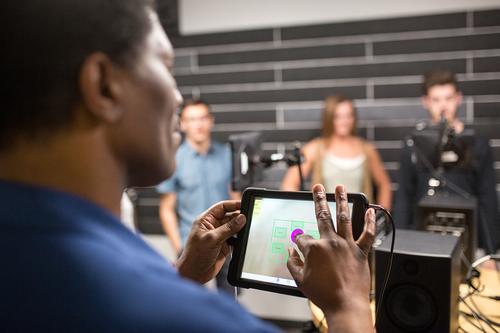

This fourth issue of the tekhné online journal emerges from the Technology, Music and Ableism strand of the project, led by OUT.RA. Each of the contributions gathered here approaches the meeting of music and disability from different angles: collective improvisation, personal narrative, instrument design, listening practices, and advocacy for embodied differences as a lived and self-determined experience and identity. What runs through these texts is not a single stance on disability, but an insistence that - as music is a space where cultural norms can be challenged, reconfigured, and reimagined - it can be recognized as a site of knowledge, artistry, and form.
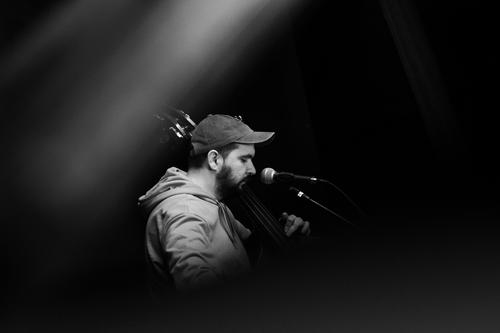
Musician Bá Alvares reflects on nine years of working and improvising with the group Os Heróis Indianos Romanos Africanos, tracing how shared creation dissolves hierarchies and replaces norms of "musical training" with attention, trust, and deep listening understood as a mode of relational presence. Personal histories of jazz, free improvisation, neurodiversity, and community-building converge with the lived expressiveness of the group's members, each bringing their own logic of gesture, sound, and presence. Drawing on ideas of interdependence and mutual attunement, the essay frames improvisation as a political practice of unlearning normalcy, resisting exclusion, and building forms of connection that flicker into being through collective listening. The performances are for the participants first - an affirmation of difference, joy, and the refusal of the "ordinary."
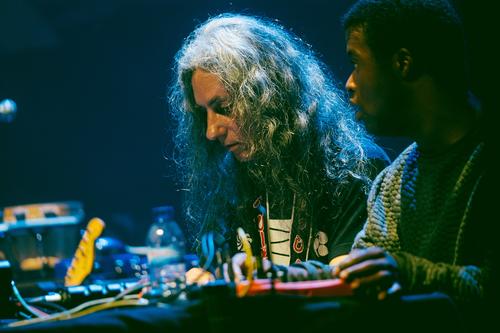
Os Heróis Indianos Romanos Africanos is an inclusive music collective from Barreiro, born in 2016 from a partnership between OUT.RA/OUT.FEST and Associação NÓS. Led by Alan Courtis, the group has turned workshops into a sustained practice: from early club shows to a pandemic livestream to an opening slot at OUT.FEST in 2024. In this essay, Courtis traces that journey while arguing for music as a right, outlining practical techniques for accessibility, and framing inclusion as ethical, social, and artistic work that reshapes who gets to make and share sound, aiming to restore people labeled “disabled” to full artistic subjecthood.
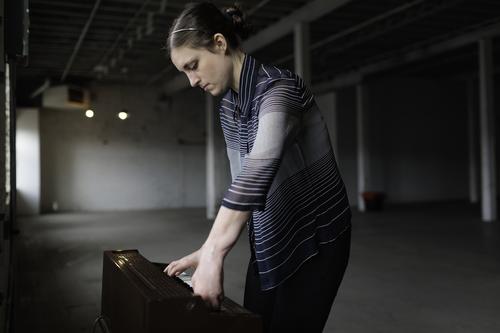
Ableism shapes who music spaces are built for, how performances unfold, and which bodies are presumed “correct” for the stage. Musician Molly Joyce starts from lived frictions – elevators withheld, “all-hands” load-ins, enforced silence, undisclosed piece lengths – to show how concert norms police bodies and presume nondisabled capacity. She contrasts these with disability culture’s priorities: rest as collective practice, “crip time” that makes duration explicit, language that names disability rather than dodging it, help as consent-based interdependence, and a rethinking of virtuosity beyond speed and spectacle. Examples span policy and everyday culture (from subminimum wages to family exclusion in quiet venues), and point to alternatives in current practice, including JJJJJerome Ellis’s time-attentive sets, RAMPD’s industry advocacy, and mixed-ability ensembles. The result is a clear proposal: redesign musical spaces, schedules, and expectations so disabled artists perform with, not against, disability – and audiences learn to listen accordingly.
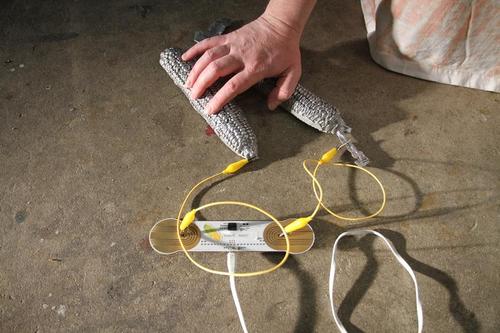
A sculptural modular instrument built from cast-aluminum corn cobs becomes a playful, accessible interface for electronic improvisation. Informed by AUMI and community workshops with neurodiverse participants, it privileges touch, curiosity, and low-barrier entry while still holding real complexity. Rooted in the Mills/CCM and Tape Music Center lineage (Buchla 158, “west coast” exploration), the corn synth breaks gesture-sound causality and bakes randomness into performance, leveling hierarchies between experts and newcomers. In concerts that blur audience and performer, it operates as evolving DIY design, inclusive pedagogy, and social invitation to listen together.
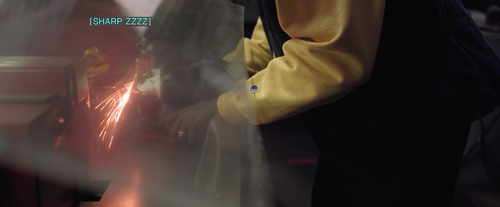
Moving from a Los Angeles house rattling under sub-bass frequencies to the conceptual frames of The Infinite Ear exhibition and Pauline Oliveros’s Deep Listening, Alison O’Daniel traces how vibration, touch, and attention become parallel acoustics. She contrasts hearing culture’s unexamined “sonic trust” with d/Deaf practices that read sound through absence, misreading, and translation. Caption-writing in her film The Tuba Thieves becomes authorship and pedagogy – spatial cues and evocative tags like [SHARP ZZZZZ] or the imagined [WOBBLING, SNARLING SAWTOOTH WAVE] render sound legible beyond the ear. Reddit threads, sirens, HVAC hums, and everyday drones serve as case studies in subjective audition. The essay proposes a vocabulary where listening is multisensory, captionable, and communal, inviting a shift from hearing-as-default to sound as a shared, reinventable field.