From Microbes to Vibes
Published on
From Microbes to Vibes: Thoughts on Sonic Ecologies explores the intersections of nature, technology, and experimental sound. The essays approach nature not merely as scenery but as a network of organisms, processes, and relationships, while technologies appear not as instruments of control but as tools for perception. Across topics ranging from field recording, radio transmission, and sonification to microorganisms, ecology, and speculative listening, the contributors examine how artistic and technological practices can reveal relationships that extend beyond everyday human experience.
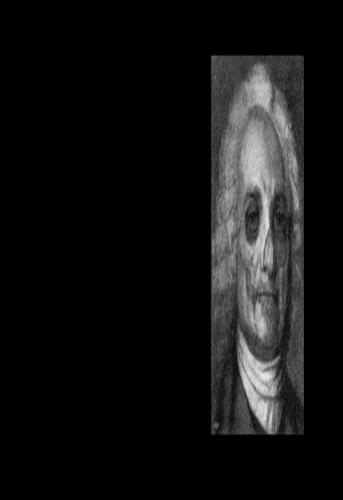

From Microbes to Vibes: Thoughts on Sonic Ecologies explores the intersections of nature, technology, and experimental sound. The essays approach nature not merely as scenery but as a network of organisms, processes, and relationships, while technologies appear not as instruments of control but as tools for perception. Across topics ranging from field recording, radio transmission, and sonification to microorganisms, ecology, and speculative listening, the contributors examine how artistic and technological practices can reveal relationships that extend beyond everyday human experience.
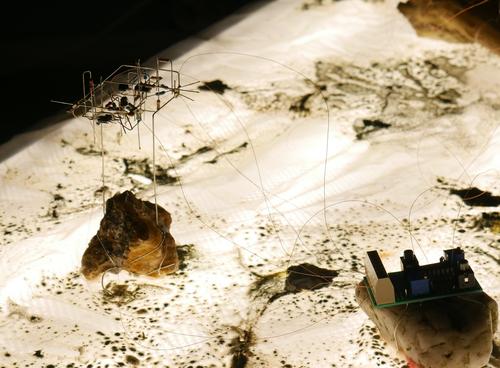
Microorganisms inhabit every environment on Earth and are deeply intertwined with human life, including shared environments of sound and vibration. Recent scientific advances have revealed that individual cells produce measurable vibrations and can respond to acoustic stimuli, with studies showing that sound can influence microbial growth, metabolism, reproduction, and cellular activity. These findings suggest that microbes are active participants in vibrational environments, despite lacking conventional hearing organs. Exploring these relationships further, experimental bio-sonic practices combine microbiology, sound, and art to investigate interactions between humans and microorganisms through living cultures, fermentation processes, and microbial-electronic interfaces. By treating microbes as responsive agents rather than passive biological matter, these approaches highlight the complex and often overlooked connections between sound, life, and ecological systems, encouraging a broader understanding of human and non-human coexistence.
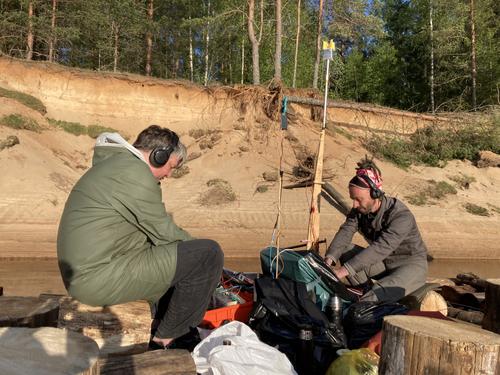
Artūrs Punte, a Latvian sound artist, poet, and member of the Orbīta collective, develops the Strenči Sonification Station as a long-term investigation into environmental listening and sonification practices. In this essay, he shares an experience of gradually moving from complex technological systems toward radically simple methods of sound capture. Through fieldwork in Strenči and repeated expeditions on the Gauja River, he and his collaborators test sensors, hydrophones, and Arduino-based devices to translate environmental data into sound.

Līga Pentjuša is a research assistant at the Latvian State Forest Research Institute “Silava” and a PhD student. Her research focuses on forest road verge habitats and the biodiversity of less-studied ecosystems. This is a reflective essay by a field biologist who becomes involved in experimental art and music. She worked as a field guide for artists Matthew Biederman and Pierce Warnecke during the project “Phytomorphic Topographies”, helping interpret and select elements of Latvian ecosystems for visual and audio documentation. This collaboration led her to the Skaņu Mežs festival and other experimental film, music and art events. The essay reflects on interdisciplinary exchange between ecology and art, and on how unfamiliar artistic formats influence perception and interpretation.
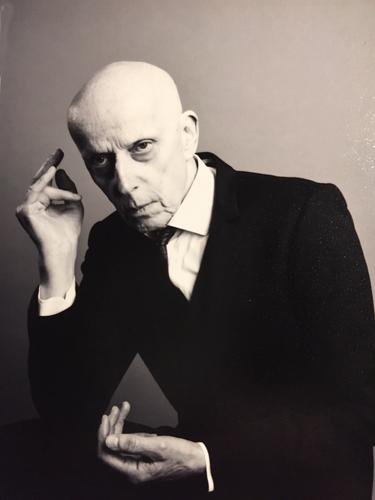
Leif Elggren is a multidisciplinary Swedish artist working with sound, performance, installation and writing. His practice explores dreams, absurdity, and inverted social hierarchies, often using symbols, bodies, and objects as sonic or conceptual interfaces. Many works investigate communication across boundaries between life and death, drawing on Emanuel Swedenborg and ideas of spiritual contact. In projects such as “Talking to a Dead Queen,” inspired by Christina, Queen of Sweden, copper pipes function as antennas for indirect dialogue with historical figures. In “Under the Couch,” recorded beneath the famous Sigmund Freud’s couch, sound is treated as an unconscious layer beneath psychoanalysis. Other works transform engraving, including Claude Mellan’s “Sudarium of St Veronica,” into playable sound objects, and explore contagion metaphors in viral audio. Overall, his work merges material processes and metaphysical speculation into sonic investigations of presence, absence, and mediation.
In spring 2025, artists Pierce Warnecke and Matthew Biederman spent a 10-day residency in rural Eastern Latvia through the tehknē and Skaņu Mežs residency program, guided by botanist Liga Pentjusa from the Latvian State Forest Research Institute “Silava”. Working in protected forests, marshes, and peat bogs, they combined field recording and photogrammetry to document endangered ecosystems. Their conversation on Phytomorphic Topologies focuses on working with landscapes through technical and conceptual processes that “give the land agency,” and treat place as an active collaborator. They discuss how photogrammetry and Gaussian splats shift ideas of framing, immersion, and realism, producing images that can appear hyper-real yet collapse into abstraction at the edges. Sound and image are layered across multiple scales, creating “zooms” and spatial depth between media. The project reflects on ecological urgency, non-extractive documentation, and performance as a physio-emotional encounter shaped by collaboration between sound, image, and place.